The European Commission reaffirmed its full support for the Greece-Cyprus electricity interconnection project (GSI), one of eight energy “corridors” deemed an “absolute priority” for the European Union.
“This is an extremely important project for Cyprus, Greece and all of Europe,” Energy Commissioner Dan Jørgensen told Kathimerini on the sidelines of Wednesday’s presentation of the EU’s Grids Package.
“We have already allocated significant European financing to this project and remain committed to carrying it out. It is very clear that it is necessary for the countries involved, and we therefore support it,” he said.
The Great Sea Interconnector, as the link has been named, is being funded via the Connecting Europe Facility, with €2.3 million for feasibility studies and €658 million for construction.
Among the seven other projects being promoted by the Commission are the Trans-Balkan natural gas pipeline – whose reverse-flow infrastructure forms the backbone of the Vertical Natural Gas Corridor – and upgrades to electricity connections in Southeastern Europe, including along the Hungary-Romania-Bulgaria-Greece axis, aimed at reducing recurring spikes in prices and extreme market volatility across Greece’s neighborhood.
Jørgensen dismissed claims that high electricity prices stem from what are effectively monopolistic practices in parts of Central Europe, where countries, despite being interconnected, restrict power exports and thereby drive up demand and prices in southern markets.
Citing relevant reports, he told Kathimerini that “the parts of Europe that are not well interconnected are the regions where electricity prices are highest. It’s not the only factor, of course, but it certainly affects Southeastern Europe. Unfortunately, the countries in the region are not well connected and will therefore benefit tremendously.”
With its new electricity grids package, the Commission proposes developing the network through joint European planning, with provisions for fairer cost-benefit allocation. The goal is to redesign the electricity market through enhanced networks, as the EU estimates it already saves about €33 billion annually from energy interconnections.
Greater market integration could save €40 billion annually, while increasing cross-border electricity trade by 50% could boost EU GDP by roughly €18 billion a year by 2030.
Aiming for an “energy union,” the Commission is taking on a larger coordinating role with member-states. Funding will continue through the Connecting Europe Facility, which is set to rise from €6 billion in the current EU budget to €30 billion in the next one.
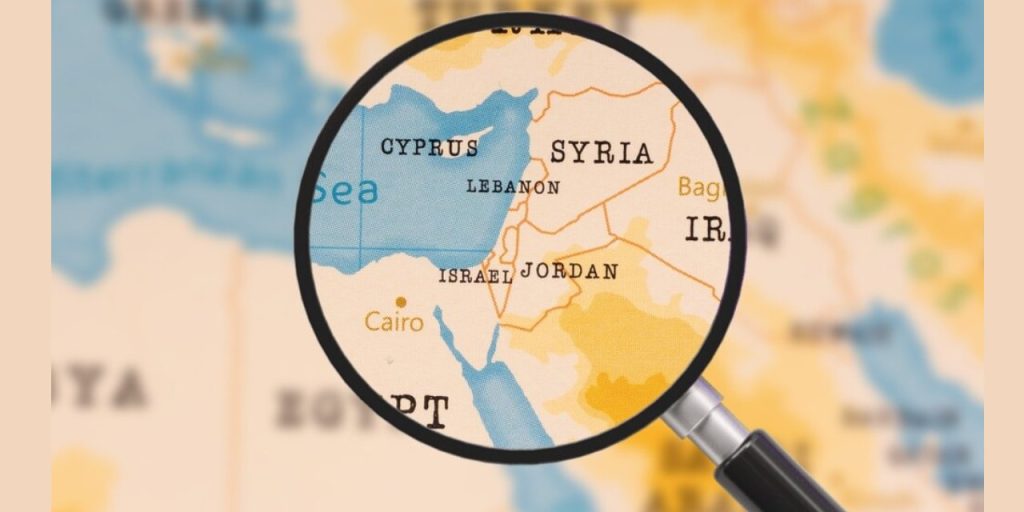
About The Greece-Cyprus power link: Officially named the Great Sea Interconnector (GSI), is a major subsea electricity cable project connecting the power grids of Greece, Cyprus, and Israel, linking island-nation Cyprus to continental Europe for the first time. It’s a key EU-backed initiative to boost energy security, integrate renewables, lower costs, and create an energy hub in the Eastern Mediterranean, despite facing technical and geopolitical challenges.
Key Aspects:
- Connectivity: It’s a 1,208 km High Voltage Direct Current (HVDC) submarine cable connecting Crete (Greece) to Kofinou (Cyprus) and then extending to Hadera (Israel).
- Energy Security: It provides Cyprus, the last EU state unconnected to the grid, with reliable power access and reduces reliance on isolated generation.
- Renewable Integration: Facilitates the sharing and export of renewable energy, especially green power from Greece and Israel, supporting EU climate goals.
- Economic Benefits: Aims to lower electricity bills for Cypriot consumers and reduce CO2 emissions.
- EU Priority: Classified as a “Project of Common Interest” (PCI) and a priority “Energy Highway” by the European Commission.